We track macros. We test hormones. We talk about gut health, brain health, metabolic health, longevity, and detox.
Yet one concept connects every one of those categories and quietly determines whether your effort pays off:
Energy Health.
Energy Health describes your body’s capacity to create energy, regulate it, distribute it, and recover it—across every system. It shapes how you feel day to day (clarity, mood, stamina), and it also shapes long-term outcomes (resilience, inflammation load, aging pace).
When Energy Health improves, a lot of other “health goals” become easier.
Why Energy Health Deserves Its Own Category
Energy often gets treated like a symptom: “I feel tired.”
Energy Health treats energy like a system: “How does my body generate and manage energy?”
This matters because wellness topics often live in separate lanes:
-
Diet & Nutrition
-
Brain Health
-
Metabolic Health
-
Gut Health
-
Hormone Health
-
Chronic Disease Prevention
-
Detoxification
-
Skin Health
-
Longevity
-
Lifestyle
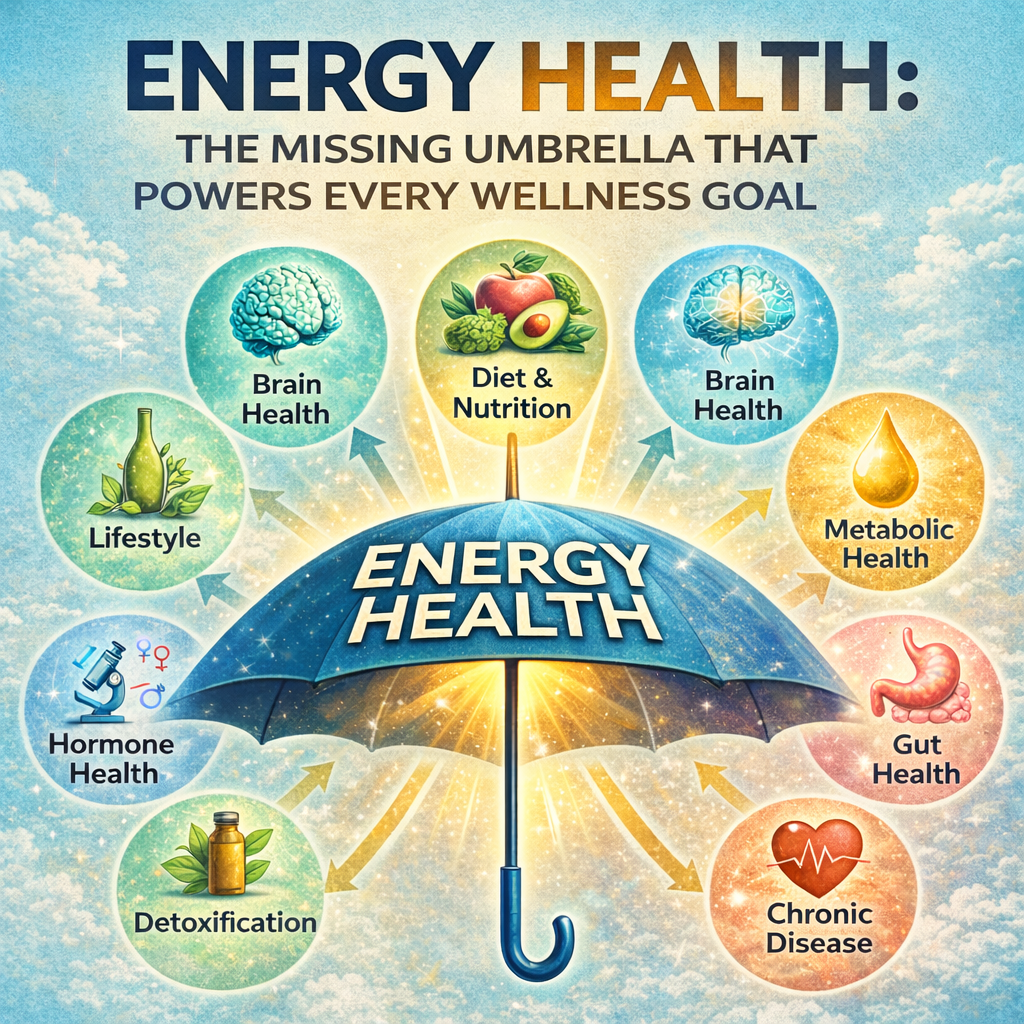
Energy Health sits above them as the umbrella, because each category depends on cellular energy production and regulation.
A simple real-world example:
Two people eat the same “healthy” breakfast and do the same workout.
One feels energized and focused.
The other feels shaky, hungry, or exhausted.
Often, the difference is not motivation. It’s energy regulation—sleep rhythm, stress load, mitochondrial efficiency, hormone signaling, nutrient status, and recovery capacity.
The Scientific Thread: Bioenergetics Runs the Show
Energy production happens primarily in the mitochondria, where cells produce ATP through oxidative phosphorylation. Mitochondria also influence inflammation signaling, oxidative stress, and cellular communication—functions that tie directly to aging and chronic disease patterns.
This bioenergetic lens appears across modern research in aging, metabolic conditions, and brain health, with mitochondria repeatedly showing up as a core regulator of healthspan.
Energy Health becomes a practical way to translate that science into everyday life.
Energy Health Includes Metabolic Health, Then Expands Beyond It
Metabolic health focuses on glucose control, insulin sensitivity, triglycerides, blood pressure, waist circumference, and other markers.
Energy Health includes those markers and also includes:
-
Circadian alignment (light exposure, sleep timing, daily rhythm)
-
Nervous system regulation (stress recovery, vagal tone, calm focus)
-
Hormonal rhythm (thyroid signaling, cortisol balance, sex hormones)
-
Oxygen delivery and CO₂ tolerance (breath and performance)
-
Recovery capacity (training load vs repair)
-
Inflammation load (immune and lifestyle inputs)
This aligns with what I teach in Feel Good & Shine On® (Chapter 2: Element #2 Energy): Energy Health is built through Energy Activation and Energy Flow—your daily habits and your ability to stay aligned and regulated.
How Energy Health Connects to Every Wellness CategoryDiet & Nutrition
Food becomes the raw material your cells use to create ATP. Nutrient density supports the enzymes and cofactors involved in energy conversion, including minerals and B vitamins that support mitochondrial pathways.
Example:
You “eat healthy,” but your energy still crashes in the afternoon. Many people find the issue is timing, insufficient protein, inadequate hydration, or poor sleep—Energy Health inputs, not willpower.
Brain Health
The brain uses a high share of the body’s energy budget, so energy regulation influences focus, memory, and mood. Sleep also supports brain clearance pathways and cognitive performance, which is why poor sleep often looks like “brain fog.”
Example:
You feel scattered at 2 PM. A short daylight walk, hydration, and a protein-forward snack often do more than another coffee because they support regulation rather than stimulation.
Metabolic Health
Mitochondrial efficiency and metabolic flexibility influence how well cells use glucose and fat for fuel. Lifestyle choices that strengthen mitochondrial function also support metabolic outcomes.
Example:
Two people cut sugar. One improves quickly. One stays inflamed and fatigued. Sleep debt and chronic stress often explain the difference because they reshape glucose handling.
Gut Health
The gut lining renews rapidly and requires consistent energy availability. The microbiome also produces metabolites that interact with inflammation and cellular metabolism—another bridge between gut health and energy regulation.
Example:
When digestion improves, energy often improves too because the body absorbs nutrients more efficiently and inflammation tends to calm.
Hormone Health
Thyroid hormones influence mitochondrial biogenesis and energy metabolism, while cortisol influences energy allocation and recovery. Hormones act like conductors of the energy orchestra.
Example:
Someone can have “normal labs” and still feel flat if sleep rhythm, stress load, and nutrient status keep the body in a low-recovery state.
Detoxification
Detox pathways require energy. Liver processing, cellular repair, and inflammation regulation all demand ATP. When energy reserves are low, the body prioritizes survival and defers repair.
Example:
When people improve sleep and hydration, their “detox symptoms” often calm because the system has more capacity.
Skin Health & Aging
Repair, collagen turnover, and resilience depend on cellular energy and oxidative balance. Aging science consistently points back to mitochondria and cellular signaling as central themes in healthspan.
Example:
Better sleep and consistent protein often show up in hair, skin, and nails faster than people expect because repair finally has resources.
Energy Activation and Energy Flow: The Two Levers That Change Everything
In Feel Good & Shine On®, I teach Energy Health through two essential components:
Energy Activation
The habits that increase available energy:
-
Morning daylight exposure
-
Real, nutrient-dense food
-
Hydration
-
Strength training and Zone 2 movement
-
Consistent sleep routine
-
Stretching and mobility
-
Micro-breaks that reset the body
Energy Flow
The practices that improve regulation:
-
Breathwork
-
Nature time
-
Mindfulness and gratitude
-
Stress recovery
-
Play and joy (yes, this is biology too)
Energy Activation builds the engine.
Energy Flow keeps the engine running smoothly.
Why Energy Health Changes Results When “Nothing Works”
Many people do the right things and still feel run down.
Energy Health asks a different set of questions:
-
Is sleep timing aligned with circadian rhythm?
-
Is training paired with enough recovery?
-
Is stress regulation practiced daily?
-
Is the environment supportive (light, water, air, toxins)?
-
Are nutrients and hydration sufficient to convert fuel into energy?
Energy Health creates a clear framework when efforts feel scattered.
The Takeaway
Energy Health deserves its own category because it connects everything.
It supports the body’s capacity to:
-
produce cellular energy
-
regulate stress and recovery
-
stabilize mood and focus
-
maintain metabolism
-
support hormones and gut function
-
strengthen resilience as you age
When Energy Health becomes the foundation, other goals stop feeling like separate projects.
They start feeling like one integrated system that finally works together.
References
Wallace, D.C. (2005). Mitochondria and the regulation of energy metabolism. Cell.
Lopez-Otin, C. et al. (2013). The hallmarks of aging. Cell.
Mattson, M.P. (2008). Hormesis and cellular stress response. Trends in Neurosciences.
Walker, M. (2017). Why We Sleep. Scribner.
Swerdlow, R.H. (2018). Mitochondria and mitochondrial cascades in Alzheimer’s disease. Journal of Alzheimer’s Disease.