
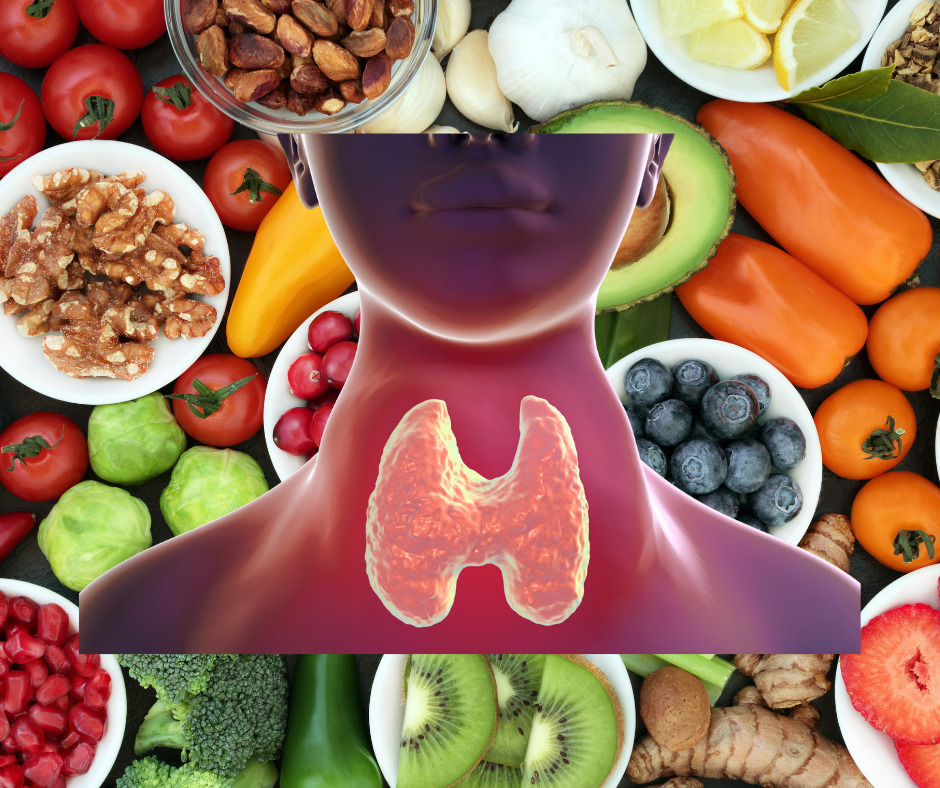
Belly fat and thyroid problems often show up together — and it isn’t “just in your head.”
Over the last decade, research has consistently shown that:
people with more central (belly) fat often have subtle thyroid hormone changes
even borderline thyroid shifts can slow metabolism and increase fat storage
weight gain itself can push thyroid hormones further out of balance
Food does not cure thyroid disease — but the right nutritional strategy can:
support natural hormone production and conversion
calm inflammation and insulin resistance
gradually reduce visceral fat (the deep belly fat that increases health risk)
Let’s walk through what that actually means — in real life.
Thyroid Hormones and Metabolism: More Than Just TSH
Most people are told, “Your TSH is normal — you’re fine.”
But TSH is only the signal from the brain to the thyroid. It doesn’t always tell us what’s happening inside your cells.
Your thyroid produces primarily:
T4 — storage hormone
T3 — the active hormone that boosts metabolic rate, energy production, and fat burning
T3 controls:
how many calories you burn at rest
how efficiently you use fat and carbs
heat production (thermogenesis)
When T3 is low — or your cells can’t “hear” it well — metabolism slows and fat storage increases.
Research links higher TSH (even within “normal”) with more total body fat and abdominal fat:
https://pubmed.ncbi.nlm.nih.gov/24847402/
And weight itself may raise TSH, creating a loop:
https://link.springer.com/article/10.1007/s40618-019-01043-6
We also look at:
Free T4 – how much hormone is available
Free T3 – how much active hormone is circulating
Reverse T3 (rT3) – a “brake” hormone that increases during stress, under-eating, illness, or inflammation and can block T3 at the receptor
Changes in thyroid hormone sensitivity — even with “normal labs” — have been linked with more visceral fat:
https://www.ncbi.nlm.nih.gov/pmc/articles/PMC9184401/
Translation: thyroid labs should be read in context — energy, symptoms, and body composition matter.
How Thyroid Hormones Influence Belly Fat
Here’s the metabolic connection, simplified:
Lower T3 → lower metabolic rate
Fewer calories burned at rest = easier fat gain.
Lower T3 increases lipogenesis
Your body stores more fat — especially in the abdomen.
High reverse T3 can block fat-burning
Stress, restrictive dieting, overtraining, illness, and inflammation can increase rT3 — slowing metabolism even more.
Belly fat feeds inflammation
Visceral fat releases inflammatory cytokines that can interfere with thyroid signaling — worsening the cycle.
This is why someone can feel like they’re “doing everything right” — but still feel stuck.
Nutrients That Support Thyroid Function (and Metabolism)
Iodine — the building block of thyroid hormone
Too little suppresses hormone production. Too much may worsen autoimmune thyroid disease.
Review:
https://pubmed.ncbi.nlm.nih.gov/28150220/
Smart food sources (moderate):
small amounts of seaweed
iodized salt
eggs and dairy
Selenium — helps convert T4 → T3
Supports thyroid tissue and antioxidant defense.
Meta-analysis:
https://www.ncbi.nlm.nih.gov/pmc/articles/PMC5307254/
Foods:
Brazil nuts (1–2/day)
tuna, sardines, salmon
eggs, sunflower seeds, whole grains
Zinc, iron, and tyrosine — the “builders”
Essential for hormone production.
Overview:
https://pubmed.ncbi.nlm.nih.gov/24038211/
Foods:
beef, oysters, poultry
eggs
pumpkin and sesame seeds, legumes
Vitamin D + antioxidants
Linked with immune health and abdominal fat patterns.
Study:
https://pubmed.ncbi.nlm.nih.gov/24355286/
Include colorful fruits and vegetables along with healthy fats.
Protein — powerful for visceral fat
Higher-protein eating (≈1.2–1.6 g/kg) helps reduce belly fat and preserve muscle.
Clinical review:
https://pubmed.ncbi.nlm.nih.gov/25926512/
Think: fish, Greek yogurt, eggs, tofu, lentils, poultry.
Functional Foods With Supportive ResearchGreen tea catechins
Associated with reductions in abdominal fat over 12–16 weeks:
https://pubmed.ncbi.nlm.nih.gov/18787524/
Fermented foods
Support gut health and inflammation:
https://www.ncbi.nlm.nih.gov/pmc/articles/PMC6358922/
They’re not “magic,” but they create a better metabolic environment.
A Note on T2 (and why caution matters) 3,5-diiodothyronine (T2).
Early research suggests T2 may influence energy expenditure and lipid metabolism — mostly in animal and experimental models.
Representative reviews:
https://www.frontiersin.org/articles/10.3389/fendo.2019.00038/full
Some data indicates benefit — but human studies remain small, short-term, and safety isn’t fully established. There is also concern about suppressing natural thyroid feedback when misused.
Based on my own experience, T2 — carefully supervised and individualized — has helped support my metabolism. But because research in humans is still developing, it should only be considered with guidance from a knowledgeable clinician.
Sample Plate for Thyroid + Metabolic Support
Breakfast
Greek yogurt, berries, 1 Brazil nut, pumpkin seeds.
Lunch
Salmon, greens, tomatoes, quinoa, olive oil.
Dinner
Chicken or tofu, roasted vegetables, sweet potato.
Tip: If you love raw cruciferous vegetables (kale, cabbage, broccoli), include them — but mainly cooked if you have thyroid issues.
When to Talk Labs With Your Provider
Consider discussing:
TSH
Free T4
Free T3
Reverse T3
Thyroid antibodies (if autoimmune issues suspected)
Numbers should always match how you feel.
The Bottom Line
Thyroid hormones shape metabolism — and metabolism shapes how (and where) your body stores fat.
Support the system by:
nourishing instead of restricting
protecting muscle with protein
managing stress and inflammation
working with a provider on labs that make sense for you
And remember — change happens gradually, not overnight.
This article is for educational purposes only and is not intended to diagnose, treat, or replace medical advice. Always speak with your healthcare provider about any symptoms, illnesses, or changes in your health.