
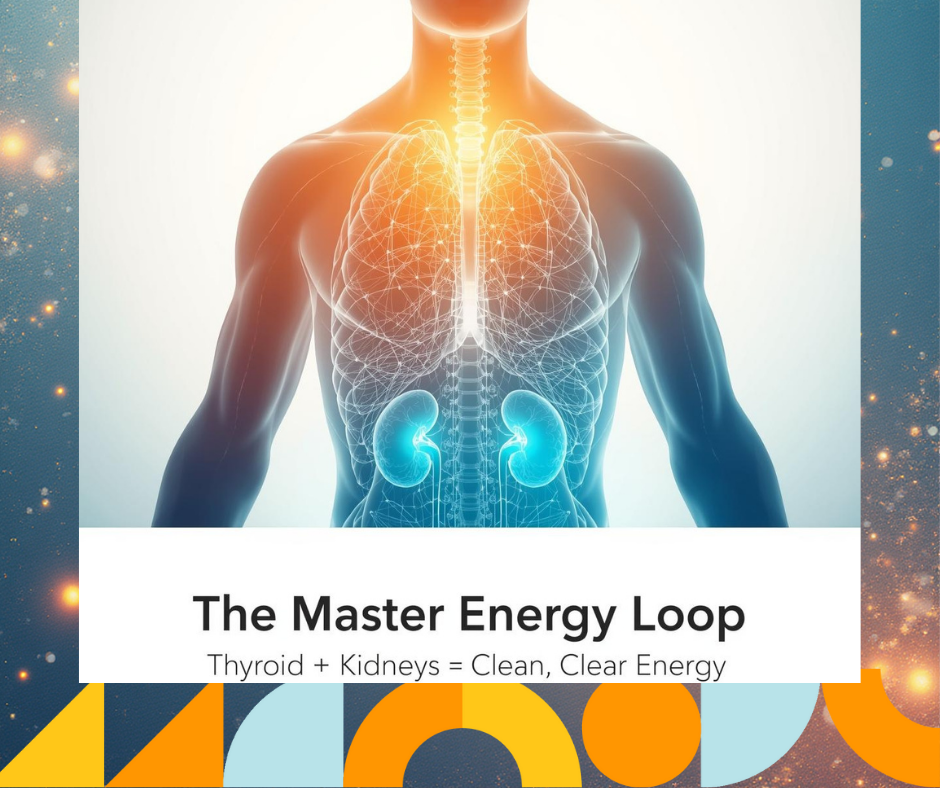
When people talk about “low energy,” they often think it’s about sleep, stress, or age. But at a deeper level, energy is about how well your body produces, uses, and clears metabolic fuel and waste. Two organs quietly control this process more than most people realize: your thyroid and your kidneys.
Your thyroid is the master regulator of metabolic energy.
Your kidneys are the master regulators of internal cleanliness and balance.
Together, they determine how alive, clear, resilient, and vibrant you feel.
The Thyroid: Your Body’s Energy Accelerator
Every cell in your body has thyroid hormone receptors. This means thyroid hormones (T3 and T4) set:
• How fast your cells make ATP (cellular energy)
• How efficiently your mitochondria burn fuel
• How well oxygen is used
• How quickly waste and used hormones are cleared
• How sensitive your tissues are to stress and inflammation
When thyroid signaling is strong, energy flows.
When it is sluggish or poorly converted, everything slows — including detox, circulation, and repair.
The Kidneys: Your Energy Clean-Up Crew
Your kidneys filter your entire blood volume many times a day. They remove:
• Metabolic waste
• Excess hormones (including used thyroid hormone)
• Environmental toxins
• Acid byproducts from energy production
• Electrolyte imbalances that affect nerve and muscle function
Clean blood = clean cellular communication = higher energy.
But kidney filtration is not passive. It is energy-dependent.
The Thyroid–Kidney Energy Loop
Thyroid hormones directly control:
• Renal blood flow
• Glomerular filtration rate (GFR)
• Electrolyte balance
• Fluid movement
• Hormone clearance speed
Low thyroid function means:
• Slower filtration
• Slower toxin and hormone clearance
• Fluid retention
• Increased oxidative stress
• Heavier metabolic “load” on every cell
At the same time, your kidneys help regulate:
• Iodine balance
• Selenium and zinc levels
• Thyroid hormone metabolism and clearance
• Inflammatory byproducts that affect thyroid receptor sensitivity
When kidney detox is sluggish, toxins and inflammatory compounds interfere with thyroid hormone conversion and signaling. When thyroid signaling is weak, kidney filtration slows. Energy drops on both ends.
This is not a coincidence — it is an energy system.
Why This Shows Up as “Low Energy” Symptoms
When this loop is stressed, people may experience:
• Persistent fatigue
• Brain fog
• Cold intolerance
• Puffiness and water retention
• Exercise intolerance
• Poor stress resilience
• Difficulty stabilizing thyroid labs
• Feeling “heavy” or inflamed despite healthy habits
It’s not just hormone imbalance.
It’s not just detox overload.
It’s impaired energy flow at the cellular and filtration level.
Restoring the Energy Circuit
True energy restoration means supporting both:
The signal (thyroid)
and
The clearance (kidneys)
Foundational support includes:
• Mineralized hydration for filtration and nerve conduction
• Adequate selenium, zinc, magnesium, and iodine balance
• Anti-inflammatory, antioxidant nutrition
• Stable blood sugar to protect mitochondria
• Reducing toxin and heavy-metal load
• Gentle daily movement and lymph flow
• Proper protein for hormone transport and tissue repair
When thyroid signaling strengthens, kidney filtration improves.
When kidney filtration improves, cellular communication clears.
When both are in sync, energy production becomes cleaner, faster, and more resilient.
The Big Picture
Your thyroid is the throttle.
Your kidneys are the filters.
Energy is the current that flows between them.
You don’t just “make” energy — you also have to clear the metabolic smoke that comes from burning fuel. When the signal and the filter work together, your system runs clean, light, and powerful.
This is Energy Health at the organ-system level.
References
-
Iglesias P, Díez JJ. Thyroid dysfunction and kidney disease. Eur J Endocrinol. 2009.
-
Kaptein EM. Thyroid hormone metabolism in chronic renal failure. Endocr Rev.
-
Brent GA. Mechanisms of thyroid hormone action and energy metabolism. J Clin Invest.
-
National Kidney Foundation. Renal blood flow and glomerular filtration regulation.
-
Duntas LH. Selenium and thyroid hormone conversion and antioxidant defense. Clin Endocrinol.
-
Zimmermann MB. Iodine, thyroid function, and metabolic regulation. Lancet.
-
NIDDK (NIH). Kidney clearance of hormones and metabolic waste.
-
ATSDR. Heavy metals and endocrine-metabolic disruption.